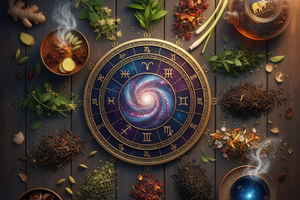

What "masala" actually means
Masala (Hindi: मसाला) translates simply as "spice blend". Not a specific blend — any blend.
So masala isn't a product name, it's a category. Rather like the word "sauce" or "bouquet": it tells you there are several components inside, and nothing whatsoever about which ones.
India has dozens of masalas. They differ by region, by family, by dish. Chai masala from Mumbai doesn't taste like chai masala from Kolkata. The logic is straightforward: every dish has its own masala.
Garam masala — the cooking blend
Garam means "hot" — not in the chilli sense, but in the Ayurvedic sense of warming the body.
A typical composition:
- cumin
- coriander
- black pepper
- cloves
- cinnamon
- cardamom
- nutmeg
- bay leaf
The critical entries are cumin and coriander. These are earthy, sharp, unambiguously savoury spices. Excellent in dal or chicken. Catastrophic in milky tea.
Garam masala goes in at the end of cooking, once the heat is off.
Chai masala — the tea blend
Chai masala is built around sweet-warm spices:
- green cardamom
- ginger
- cinnamon
- cloves
- black pepper
- sometimes star anise, fennel, nutmeg
No cumin. No coriander. Ever. That is the dividing line between the two blends.
Chai masala is simmered at the start, in water, so the spices have time to release their aroma.
The difference at a glance
| Chai masala | Garam masala | |
|---|---|---|
| Made for | drinks | dishes |
| Flavour base | cardamom, ginger, cinnamon | cumin, coriander |
| Cumin / coriander | no | yes |
| When added | at the start, simmered | at the end, off heat |
| Works with milk | yes | no |
| Profile | sweet-warm, aromatic | earthy, pungent |
What about tikka masala and masala sauce?
Tikka masala is a dish, not a blend. Chicken tikka masala: marinated chicken in a tomato-cream sauce seasoned with garam masala. It has nothing to do with tea beyond sharing a word.
A curious detail: the dish probably wasn't invented in India at all, but in Glasgow in the 1970s. Britain officially calls it a national dish.
Masala sauce is likewise a cooking product — tomato or coconut base with spices.
Dosa masala, pani puri masala, chana masala — all cooking blends for specific dishes.
The only masala you brew is the tea one.
Why you can't substitute one for the other
Technically you can. It won't be pleasant.
Cumin in hot milk produces a sharp earthy note that overwhelms everything else. Coriander adds a soapy edge. Combined with sugar, the result is difficult to describe generously.
It fails in reverse too: chai masala in a curry reads as far too sweet, dominated by cinnamon and cloves.
When buying masala, don't read the word on the front — read the ingredients on the back. Cumin or coriander in the list means it's built for food.
How to choose a chai masala
Whole spices beat ground. Ground spices fade within weeks. Whole ones hold their aroma for months.
Read the full ingredient list. If "flavouring" appears anywhere, that isn't masala — it's black tea that smells of masala. The difference registers on the first sip.
Check the tea base. A good masala is built on strong Assam. If the label just says "black tea" with no origin, it's most likely dust grade.
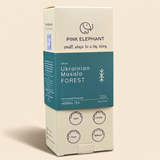
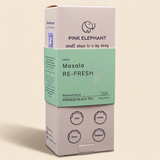
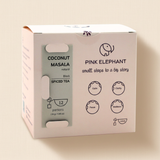
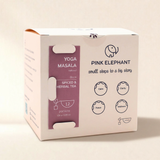
Pink Elephant masala uses Assam, whole spices, and a recipe developed after visiting plantations across India and Nepal. No flavourings, packed in biodegradable corn-fibre sachets.
How to brew it properly is covered in this article.
FAQ
Is masala a tea or a spice? Neither. The word means "spice blend". There are tea masalas and cooking masalas.
Can I put garam masala in tea? Technically yes. Palatably no. Cumin and coriander in milk taste like curry.
How is garam masala different from curry powder? Curry powder is a British invention, heavy on turmeric, which makes it yellow. Garam masala is an Indian blend, darker, with no turmeric dominance.
Does chai masala contain caffeine? The spice blend itself doesn't. Caffeine comes from the tea base. Rooibos versions are caffeine-free.