
What masala chai is
Masala chai is an Indian drink of black tea, milk, water and a spice blend. Masala means "spice mix", chai simply means "tea". So the name translates, quite literally, as "spiced tea".
The key difference from European tea culture: chai is boiled, not steeped. The leaves simmer with milk and spices for several minutes. That's not a shortcut — it's the method.
The classic build
Tea base. Strong black tea, ideally Assam — it holds up to milk and spices instead of disappearing under them. Darjeeling and oolong don't work here; their delicacy is simply lost.
Spices. The canonical base:
- green cardamom — the backbone; without it, it isn't masala
- ginger — fresh or dried, for heat
- cinnamon — the sweet note
- cloves — depth, and very easy to overdo
- black pepper — that warm finish at the back of the throat
Regional variations add star anise, fennel, nutmeg, or bay leaf.
Milk. Traditionally whole cow's milk. Plant alternatives work — oat holds spices best, almond tends to split.
Sweetener. In India, sugar or jaggery. Honey goes in after brewing; boiling destroys both flavour and benefit.
The recipe, step by step
Serves two:
- 250 ml water
- 250 ml milk
- 2 tsp loose black tea
- 3 cardamom pods
- 2 cm fresh ginger
- 1 cinnamon stick
- 2 cloves
- 2–3 black peppercorns
- sugar to taste
1. Crush the spices. Crack the cardamom pods, bruise the pepper and cloves in a mortar. Whole spices release aroma slowly — they need to be opened.
2. Simmer spices in water. Bring to a boil, then keep on low heat for 3–5 minutes until the water turns fragrant and lightly coloured.
3. Add the tea. Stir in the leaves, simmer another 2 minutes.
4. Pour in the milk. Bring to a boil, immediately reduce the heat, simmer 2–3 minutes. The colour should land somewhere near light caramel.
5. Strain. Through a fine sieve into pre-warmed cups.
Ten minutes, start to finish.
Five mistakes that ruin masala chai
Ground spices instead of whole. Powder makes the drink cloudy and harsh rather than aromatic. Grind fresh, or use whole.
Too many cloves. The most aggressive spice in the set. Two buds for two servings is plenty.
Milk added first. Add milk at the start and the tea never properly extracts. Order matters.
Weak tea. Paired with milk, a delicate cultivar simply vanishes. You need a strong base.
Over-boiling. After the milk goes in, three minutes maximum. Beyond that, it turns bitter.
Ready blends vs. building your own
Making masala from scratch is genuinely fun — for about three rounds. Then reality sets in: the cardamom's gone, the ginger's dried out, and there is no mortar and pestle at the office.
A ready blend solves this, provided it contains actual spices rather than flavourings. Read the label: if it lists "nature-identical flavouring", you aren't buying masala.
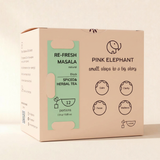
Pink Elephant masala is built to our own recipe — Assam from India, whole spices, no flavourings — in corn-fibre sachets that biodegrade instead of sitting in the ground for a century.
FAQ
Can masala chai be made without milk? Yes — it's called kadak chai, or black masala. Sharper, more spice-forward. Plenty of people prefer it.
Can I use garam masala for tea? No. Garam masala is a cooking blend containing cumin, coriander, sometimes garlic. In tea it tastes like curry. They are different blends — more in this article.
How many calories in masala chai? Depends on milk and sugar. Whole milk with a spoon of sugar lands around 90–120 kcal per cup.
Can I drink masala chai in the evening? Black tea contains caffeine, so that's a personal call. Rooibos-based caffeine-free versions exist.