
A duchess who fancied a snack
The heroine of this story is Anna Russell, seventh Duchess of Bedford, a close friend of Queen Victoria herself. Around the 1840s she found an elegant solution to her afternoon torment: she asked for tea, bread and butter and a little something sweet to be brought to her room. Not lunch, not dinner — just a small pause to survive until evening without eating her own dignity.
The idea proved so pleasant that the Duchess began inviting friends over. The room became a drawing room, the bread became refined sandwiches and pastries, and a mundane habit turned into a social event where one could meet, swap news and show off a new dress.
And since the Duchess's friends included ladies of the court, word of the new ritual reached Queen Victoria — who approved. In time Victoria hosted teas of her own, and her favourite sponge cake with cream and raspberries is still known today as the Victoria sponge.
An honest footnote (because history loves to exaggerate)
Here I can't resist — as someone with a journalist's past — adding a footnote. The pretty legend says the Duchess "invented" afternoon tea. Historians look on sceptically.
Because tea in the afternoon was drunk before her too — English spa towns like Bath were serving "afternoon teas" back in the 18th century. And Queen Victoria's own diary mentions tea with cakes "in the German fashion" — and if her friend the Duchess had really invented it, Victoria would more likely have written "in the Bedford fashion."
So the truth is probably this: Anna Russell didn't invent afternoon tea — she made it fashionable. And that, as any marketer knows, is sometimes more important than the invention itself.
Anatomy of a proper afternoon tea
A classic tea has its own unspoken structure, and you move up through it from savoury to sweet:
- Sandwiches — thin, crustless, with cucumber, salmon, egg.
- Scones — warm, with clotted cream and jam. The eternal British argument: which to spread first. There's no answer, only wars.
- Sweets — pastries, tarts, that very sponge.
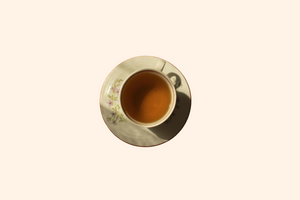
And at the centre of it all — the tea. Traditionally black and strong, like a Darjeeling, which holds its own against all that food without getting lost behind it.
How to host your own afternoon tea
The good news: you need neither a dukedom nor a butler for afternoon tea. You need only a reason to pause and a little attention to detail:
- Brew a proper black tea in a pot rather than a bag in a hurry — it's the foundation, not the background.
- Assemble a simple three-tier logic: something savoury, scones, something sweet. Even if it's just bread, cheese and biscuits — the structure matters, not the pomp.
- Set aside the time for it. The whole point of the ritual isn't the food — it's dropping out of your to-do list for half an hour.
Because if you think about it, the Duchess didn't give the world sandwiches. She legalised the right to stop in the middle of the day and do nothing — just drink tea. And that may be the most useful invention in this whole story.